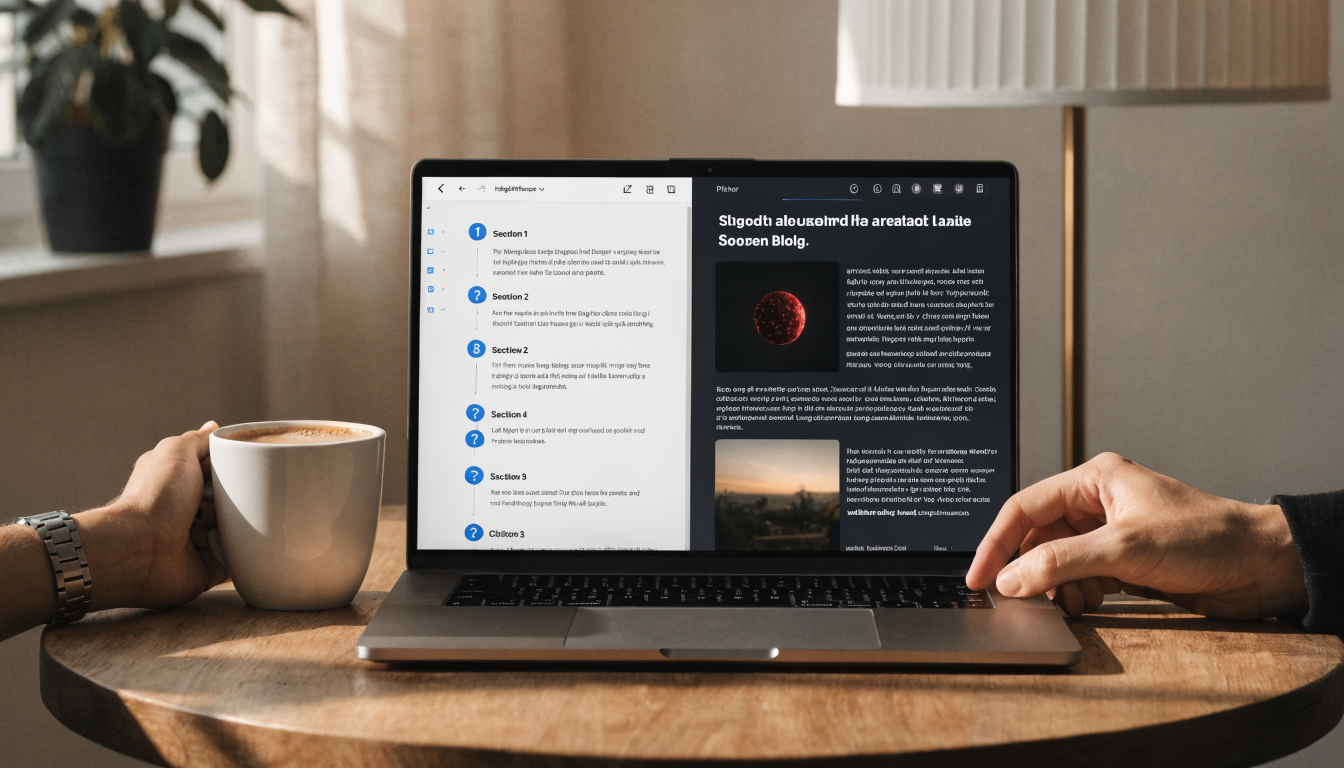
AI Blog Writer: Create Better Posts Faster in 2026
Blogie
Mar 14, 2026 18 min read
Your Feels Harder to Write Than Shouldh2>
ging looks simple from the: pick a topic, some paragraphs, publish. But if you’ve ever tried to do it consistently (especially for a SaaS business), you already know the truth—most of the happens beforeem the first real ever on page That’s why blog writer can feel like a… and also why it feel frustrating if you expect it to magically solve.
3 hidden time sinks: research outlining and edits
The actual writing is rarely theest part. The slow part is chasing down competing posts, checking what keywords people actually, an that doesn’t ramble, and then doing “one more edit five different times. If’re publishing for a product like Blogie, you’re also juggling examples, screenshots, and the little details that make the post feel real.
That’s where an AI content generator most: itens blank-page phase accelerates research summaries, and turns scattered notes into a workable structure Guides are useful because spell out what these tools can and’t reliably automate so you’re not expecting miracles.
Where AI helps most (and where slows you down)
I’ve found the biggest gains come frompre-writing”: outlines, variations, and rewriting cl sections into something readable. AI can slow you down you keep regenerating the same section hoping it perfect, or when you skip the brief and end up with a draft that’s technically fine but totally off-angle.
Anstrong>AI writing assistant also slows you if you treat it like a search engine. If you ask it for facts and publish them without checking, you’ll eventually ship something wrong. That mistake costs more time (and) than you.
3>What “good” looks like: speed, accuracy, voice
Good” with ai blog writer is not just finishing faster. It’s faster lowering your standardsaccurate claims, clear examples, consistent brand, and a that feels like a human made decisions Speed, but so sounding like you actually care about the reader’s problem.
What an AI Blog Writer Does (Beyond Spitting Text)
Photo by Salvador Rios on Unsplashai blog writer” and imagine one big that says “Write my post.” You <>can use it that way but,’s least interesting (and least reliable) use. The real value is how it supports the writing cycle—from rough idea a publishable asset that fits your SEO content.
Drafting, rewriting, summarizing, and expanding
A solid AI writing assistant can draft a post from a brief, but it’s as for jobs: rewriting a confusing paragraph,izing a long document into bullet points, or a thin section with examples context. This is the of work that burns because feels too “small” plan but too important to skip.
>In practice, I’ll often draft quickly, then use AI rewrite for clarity I control the and tone. That “-in-the-loop” approach is how get speed without turning everything into generic filler.
Idea, outlines, headline
ai blog writer can give you 20 angles in seconds: beginner vs advanced, mistakes vs best practices, vs case studies, comparisons vs how-tos. It especially for SaaS blogging where can to feel same-y after a few months.
lines are another underrated win You can generate variations based on different intents—informational commercial, or “problem/solution”—and pick the one that what actually to rank for.ur: turning one into assets
This where AI becomes content multiplier. One blog post can become a LinkedIn carousel outline, an email newsletter draft, short social captions, and a “keyaways” section for your product page. That’s just efficiency; it’s how you stay consistent without living in contentg.
If you want a broader view of teams use AI tools across content pipelines is a solid reference point It reinforces the same theme: the best results come from workflows, not one-off generations.
the Tool: The 7 Features That Matter in Real Life
AI-generated illustration
> all AI tools are built publishing. Some are great at writing paragraphs and terrible at organization. Others are decent at SEO suggestions but feel clunky when you try to a-form piece. When you’re picking an ai blog writer for a real business (not a weekend hobby), the features that matter are the ones that reduce friction across the entire workflow.Long-form control:, sections, and tone
Long control means you can lock the structure before the tool starts improvising. You want outlines you can edit,-by-section generation, and tone settings don’t just “friendly” actually consistent rhythm and vocabulary. If you can’t steer the draft,’ll spend your time wrestling of editing.
I look for tools let you regenerate single section without nuking the whole piece. one feature alone save from the “redo everything because one was weird” trap.
Fact-checking support: citations, browsing, or sources
Even the best content generator can halluc, support sources is huge. That might mean suggestions, optional web browsing or at least way attach reference notes so the model sticks closer to reality. The tool doesn’t need to be perfect, but it needs help you verify claims efficiently.If your content includes stats, dates, pricing, or regulatory, “trust me bro” is not a sourcing strategy. A that helps you what needs verification is worth paying forp
Team workflows: collaboration, approvals and versioning
>If you’re solo, you’ll want comments,, and approvals. Marketing teams often need a quick legal or product review, and versioning matters you’re iter on pages that already rank. Without these features, AI “speed disappears because you’re copying drafts into docs, chasing approvals Slack, then pasting everything back.
blogie.ai is: writing, editing, publishing, and distribution sit in one place, so collaboration doesn’t become a second job.
SEO: briefs, keywords, structure checks
SEO helpers should support your, replace it. Good tools keyword variations, suggest headings that map to intent and check structural basics (H2/H3 hierarchy, snippet-ready definitions, internal linking opportunities). Great tools also help keep the post readable, because a perfectly “optimized” article nobody finishes is not a.
If you want a quick roundup of the broader tool landscape, The 6 best blog writing is a useful comparison. Use like that as a starting point, test tools against your real workflow.
The Fast Workflow: From Keyword to Published Post in One Sitting
If your goal is to publish more without melting your brain, you need a workflow you can repeat on a normal weekday. I’m talking about something that works even when you’re busy, even when’re not feeling “creative,” and even when the post isn’t dream. A reliable ai blog writer workflow is basically set of guardrails that you moving forward.
Start with a brief: audience, intent, and angle
A brief is your unfair advantage because it vague. Write down the target (for Blogie, a SaaS, marketer, solo creator), the search (informational vs commercial), and the anglewhat you’ll say that competitors don’t). This takes 10 minutes and can save you an hour of.
I like to add one more line: “What should the reader do next?” That forces the to have a purpose—start a trial, a content calendar, refresh an old post—rather than just existing.Outline-first prompting that rambling
Here’s the about AI: if you don’t give it structure, it will happily produce 2000 words that fine go. Outline-first prompting means you generate (or) H2/H3 structure first, then approve before drafting. This is the fastest to avoid theAI essay”.
the outline is, generate section-section. That keeps each focused and makes it easier to insert examples, internal links, and product mentions naturally without feeling like you’re forcing them in.
3Draft → revise → finalize: aable 3-pass system
One-pass is a myth. A 3-pass system is realistic and fast: Pass one is a complete draft with placeholders for missing facts. Pass two is for, examples, and the structure. three is SEO polish—, meta description, internal links, blocks, and formatting.
If you’re Blog, the “ sitting” part becomes more achievable because you’re not exporting drafts to a CMS or juggling plugins. The fewer tool-hops you, more energy you have for actual quality control.Prompts That Produce Readers Trust ( Generic Filler)
Most “AI prompt advice” online is either too vaguewrite in a tone”) or too (giant prompt manifests nobody re). The sweet spot is that are simple, reusable and specific enough to shape the output. If you want an <> blog writer to produce people actually trust your prompts need do more than for words—they to set standards.
Voice prompts how sound like a human brand
Voice prompts best when you define what doemand what avoid For example: “Write like a friend; vary sentence length; use mild opinions; avoid hypey marketing language; keep paragraphs to2–4 sentences.” That’s more actionable than “friendly and professional,” which can anything.
If Blog is platform you’re writing for, your voice prompt can also reflect your product philosophy “, tool-juggling, minimal setup.” brand cues subtly up wording examples, making the post feel consistent across your site.
Structure prompts:, checklists, and
I’ll often include: “Add one table comparing,” or “Add a checklist at the end the section.” A goodstrong>AI writing assistant can follow those constraints well, and makes your content look more “finished” with less manual.
Specificity prompts: that improve clarityh3>
Constraints are secret. for3 examples for SaaS marketers,” “2 common mistakes and how to fix,” or “write this in280320 words with no fluff.” You basically the draft to concrete, which what readers interpret expertisep>
Another practical constraint “If you claim a statistic, it [VERIFY] so I can fact-check.” That tiny habit alone upgrades your quality control and prevents bad information fromaking through.
SEO an AI Blog Writer: to Rank Withouting Robotic
SEO is a of AI-written content goes off the rails. People over-optimize, stuff, and end up with posts that technically include right phrases but like they were written to impress a spreadsheet. The better approach is an ai blog writerstrong> to support a clean SEO content workflowone where humans decide intent positioning, and AI helps faster.Matching search intent: informational vs vs
I like to state intent directly in the:Reader wants a workflow they can copy today,” or “ is tools and needs criteria.” When your AI content knows the, the draft becomes sharper and less generic.
On essentials: titles, headings, internal links, and snippets
On-page SEO is discipline. Use a title that promises a clear outcome, headings that sub-questions people ask, and links help readers explore related topics. For Blogie, a internal link is your homepage when you mention an-in-one workflow: Blogie.
Snippets matter too Add a short definition near the top (“An ai blog writer is…”) and make sure key steps are in lists. AI can generate this formatting, you still check that matches reality and doesn’t overpromise.
E-A signals you can even with AI help
E-E-A-T (Experience, Expertise Authoriveness, Trustworthiness) isn’t you sprinkle on at the end—it’s something you show specifics. Add personal experience (“I’ve found…”), real processes tool screenshots, examples tied to your product’s actual capabilities. Those details are hard to fake and easy for readers to trust.
When drafts your post, your job is to “humanize with evidence Add a quick case example, a before/after workflow or a metric you’ve ( can defend). That’s how anstrongai blog writer
2>Quality Control That Saves You From Embarrassing Mistakes
is until it creates a public mistake you can’t unpublish fast enough. I’ve watched teams rush AI drafts, to realize later included a made stat, mis a feature, or recommended tactic that violates a platform policy. control’t a “nice to have” with an ai blog writerstrong>; it the price of admission.
3>The anti-hallination: numbers,, and claimsh3>
The way to catch hallucinations is to on most fragile elements numbers, names dates andaccording to” statements. Anything that looks like a fact be verified, if it influences (pricing, compliance, performance claims). I like to scan drafts specifically for percentages and proper nouns before do any stylistic edits.
A practical habit is to keep “verification doc for post: links sources, notes what was confirmed and any assumptions. It sounds extra but it saves when someone challenges a claim six months later.
ity is often less about and more about specificity. Add your examples your steps, your own phrasing, and your own “how we do it at our company” moments.’s separates helpful article from thousand other posts that say the same thing with different adjectives.
AI writing assistant can rewrite but you have to decide the boundaries.
to expert quotes or primary data
If your topic affects money, health, or legal risk expert input isn’t optional—it’s what makes the content responsible. Even for marketing topics, a short quote a subject-matter expert can raise perceived authority reduce skepticism. You’t a full research study; a single insight is enough.Primary data can be simple too: from own, mini of customers, or anonymized trends your platform. When you that with anstrongai blog writer draft you both speed and.
AI makes publishing easier, which also means it makes it easier to publish something <>n. The goal here isn’t to be paranoid—it’s to avoid preventable problems like copyright complaints, accidental privacy violations or misleading disclosures. If you’re using an ai blog writer
Copyright basics: training data vs output useh3>
You hear debates about training data, but your day-to-day risk usually comes from output that’s too close to an existing source. AI can mirror phrasing, structure, or examples, especially if you fed it competitor content. The safe move to avoid pasting full copyrighted text into prompts and to rewrite anything that feels oddly “f.”
When you’re building a post, rely on multiple sources and your own framing Original structure plus your own examples makes it far less likely’ll accidentally publish a near-copy of someone else’s work.
closures and transparency: what to tell
Whether you disclose AI use depends on your brand, industry norms, audience. I generally like transparent language when it matters “This article was drafted with AI and reviewed by our team,” or “AI-assisted, editor.” That sets expectations and signals you’re not to trick anyone.
Transparency also helps internally. When your knows is-assisted, they’re more likely to do the right level of review instead of assuming everything is already “final.”
If you’re writing with an ai blog writer a, treat it any other SaaS tool: check data handling, permissions, and who can drafts A little caution prevents a lot of regret later.
YOUTUBE_SEARCH how to write SEO blog with prompts and E-A-T editing -->
Real-World Use Cases: The Posts AI Handles Best (and Worst)
AI-generated illustrationai blog writer feels like you hired a fast junior writer who takes direction well. you match it to the wrong job, you’ll spend time fixing problems than you would have spent writing from scratch.
: how-tos,, refreshes, and content updates
AI is at structured content where the goal is:-by-step guides, feature, checklists, and “what to do next” posts. It’s also great for refreshing older content—updating headings, adding new section, readability, and aligning the post with current search intent.
This is where Blogie’s all-in-one approach shines: you can generate, edit, add images, publish without exporting. For routine, that speed adds up fast.
3>Risky: medical,,, breaking news
Highakes are because “mostly correct” is still. and legal content often requires credentials and wording, and breaking news changes too for to up without real-time verification Even with a strong writing assistant, you need review careful sourcing.
If do publish in these areas treat AI as a drafting, an authority. claims conservative, add citations, and avoid giving personalized advice that should come from a professionalp>
Hybrid wins AI draft + expertise authority
The best long strategy is hybrid content: AI accelerates the draft and structure, while humans add the experience— screenshots real numbers, stories, and real opinions That mix tends to outperform purely AI posts because it personality and proof.
I’ve seen hybrid workflows produce content that ranks and converts because it feels written by someone who actually done the work. That’s the standard to aim with an blog in 2026p>
A Measurement Plan: Proving the Tool Pays Off
>If can’t measure AI is helping, you’ll end up with-based decisions One month you’ll publish a lot feel great, the next you’ll wonder any of it mattered. A measurement plan keeps ai blog writer investment grounded in results not enthusiasm.
Time-to-p, cost per post, revision cycles
Start operational metrics because they’re easiest to track. Measure time-to-publishidea to live), cost per post (writer time + editing time + tools), and the of revision cycles before approval. The goal isn’t “zero revisions”—it’s fewer chaotic rew and more predictable output.
If you want simple benchmark, track three posts written without AI and three posts written your AI workflow The comparison will show you where you’re actually saving time and where process needs.
SEO metrics that matter: CTR,, and conversions
Rankings are nice, but they’re not the whole story. Track impressions and click-through (CTR) to see whether your titles and snippets are working, and track conversions to see whether post drives sign, email subscribers, or product clicks. For SaaS, conversions often a better “truth metric” than position.
>Also watch engagement signals you control, like scroll depth time on page If AI content clicks but nobody reads it, that’s a sign your drafts are generic or not matching intent.
audits: what improve every 30–90 days
wins compound when you update posts instead of constantly starting from. Every 30–90 days, audit top posts: outdated, add missing subtopics, improve internal links, and tighten intros that aren’t hooking readers. is one place an AI content generator is genuinely helpful because it can sections quickly.
A simple habit keep a “refresh backlog” with notes like “add 202 examples “expand tool comparison table,” or “improve snippet paragraph.” That turns content maintenance into a system instead of a guilt trip.
What People Wonder Using an AI Blog Writer
If’re an ai blog writer, you probably have few that popping up—especially if you’ve seen AI content go wrong in the wild These are the concerns I hear most, and the answers are usually more practical (and less dramatic than people expect.
Will Google penalize-written?
Google’s core stance has about qualityem>, not whether a typed every word If content is helpful, accurate, and satisfies intent, it rank. The risk is “AI detection,” it’s publishing thin, repetitive content that doesn’t add value.
>That’s editing and adding-based details matters If your post reads like template, it’ll underperform—AI or not.
3>How do I keep my brand voice consistent?
AI writing assistant and keep it consistent across posts.Over, you’ll notice in what you rewrite every. Turn those patterns into rules, and your will improve dramatically.
AI replace a writer completely?
For-st, repetitive content, AI can get close. But for that needs original insight, nuance, strategy, or authority, humans still matter. Even if drafts 80 the last 20%examples judgments and verification—is usually what the post perform.
In experience, the best setup is to use an to output while humans focus on direction and credibility.
How do I avoid plagiarism and duplicate content?Avoid pasting competitor posts into prompts, and don’t AI to “rewrite this” line-by-line. Instead, create an original outline use multiple sources, and add your own examples and structure. If a paragraph feels oddly generic or familiar, it in your own words and add details AI wouldn’t.
Plagiarism checkers can help, your defense is original thinking and a strong content quality control process.Your Next 7 Days: A Plan to Publish Smarter With AIh2>
If you want results, don’t overhaul everything at once. A week is time to build a workflow publish post, and prove to yourself that an <>ai blog save time without tanking quality. Here’s plan that’s, realistic, and designed for busy people who still want to ship.
1–: build brief template and prompt libraryh3>
Create a one-page brief template: reader, intent, angle, primary keyword, keywords and35 must- points (examples, screenshots or product features). Then build a small prompt: outline prompt, voice,-for-clarity prompt, and snippet-writing prompt. Keep it enough that you’ll actually use itp

 Blogie